
Equipment rental
Every unit leaves documented. Every unit returns documented.
DDS turns yard checks into evidence: photograph the machine at check-out and check-in, and damage billing stops being a customer-relations fight.
Damage billing without leverage
The skid steer comes back with a cracked window and the customer insists it left that way. Without dated photos from the yard, the branch writes it off to keep the account.
Walkarounds that don't happen
On a busy Monday the condition report is a signature and a shrug. The process that protects the fleet is the first thing skipped under load.
Records scattered across branches
Each location keeps its own photos its own way. Fleet managers can't see damage patterns by customer, by unit, or by site.
How DDS fits your process
A one-minute yard check that actually gets done
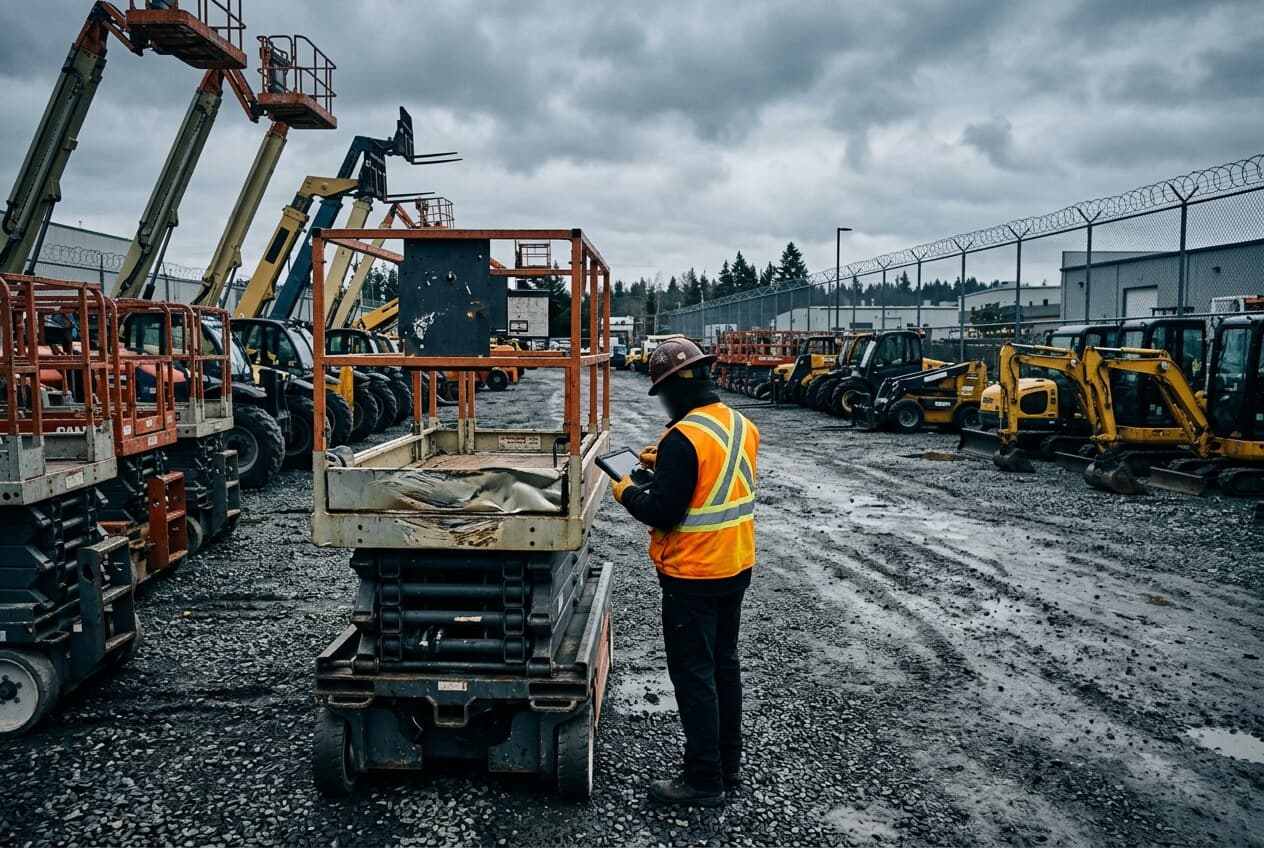
Yard staff photograph each unit at dispatch — the sides, the glass, the attachments — with the contract or unit number in the reference field. The same happens at return. Each record is timestamped and geotagged at your yard, so 'it left here clean at 7:40 AM' is a fact with evidence attached.
When a return shows new damage, the check-out record is one search away. Send the customer a read-only link showing both records side by side; most disputes end at that link. For the ones that don't, the PDF packet documents the sequence with fingerprinted photos.
Because every branch feeds the same dashboard, fleet managers finally see the whole picture: which customers, sites, and units generate damage — and what it's actually costing.
Stop arguing about when the damage happened.
A 30-minute walkthrough with your team, on your workflow, with your scenarios.